
Let me guess how it went.
The business was growing, you were stretched, so you hired. Maybe one person, maybe a few. For a little while it felt like breathing room.
Then the questions started coming back. “Can you just have a quick look at this?” “What do you want me to do here?” “Sorry, can I grab you for five minutes?”
You had more people, but you weren’t any less busy. And if you’re honest, you’re probably more tired than before.
It’s one of the most common patterns I see in growing businesses, and it’s exactly what Lloyd Thompson and I unpacked in our recent webinar, You Hired More People. It Got Worse! The short version is that more people won’t give you more capacity if everything still runs through you.
There’s a book that explains why better than anything I’ve read: Liz Wiseman’s Multipliers.
Same people, different leader
Wiseman studied more than 150 leaders and found two very different types.
The first, which she calls Diminishers, get less than half of what their people are capable of. The second, Multipliers, get nearly all of it. Same kind of people, same kind of resources, and a completely different result.
Here’s what got me. Most Diminishers aren’t bad leaders. They’re often the most capable person in the room. They’re quick, helpful and always available. And it’s those very strengths, turned up too loud, that teach a team to sit back and wait.
If you built your business by being the one who could do everything, that might sting a bit. It did for me.
So what do Multipliers do differently? Here are four habits worth stealing.
1. Use the genius you’ve already got
Wiseman says every person has a “native genius,” something they do easily and freely, without effort and without being asked. Multipliers spot it, name it and put it to work.
- Look past job titles. What does each person naturally do brilliantly?
- Tell them. People often don’t see their own genius
- Point it at problems that matter, not just their role description
Diminishers hire capable people and then underuse them. Multipliers get the most from the team they already have.
Practical shift: Before you sign off on the next hire, sit down and map the strengths of the team you’ve got. The capacity you’re looking for might already be on the payroll.
2. Talk less, so they think more
This one’s simple and really hard. If you do most of the talking, your team will let you.
Wiseman shares the story of a leader who gave himself a handful of “poker chips” for each meeting, one for every time he spoke. When they were gone, he was done. It forced him to pick his moments, and it gave everyone else room to think.
- Notice how much airtime you take in your leadership meetings
- Ask a question, then hold the silence a little longer than feels comfortable
- When something goes wrong, make it a lesson, not a reason to take the work back
I see this on the rugby field all the time. A captain who calls every single play ends up with a team that waits to be told. The one who trusts players to read the game ends up with fifteen decision-makers.
Practical shift: Speak last in your next three meetings and see what changes.
3. Stretch them, don’t rescue them
Multipliers don’t hand out answers. They set challenges that push people just beyond what they know, then ask questions that get them thinking.
- Swap “here’s what to do” for “what would you do?”
- Point to the opportunity and let them work out the path
- Give people stretch, not just more of the same work
Nobody grows doing what they already know how to do. Growth happens at the edge.
Practical shift: This week, pick one problem you’d normally solve yourself. Hand it to someone as a challenge, with a question instead of an instruction.
4. Hand it over, and leave it there
This is where most delegation quietly falls over. The task gets handed over, then it gets tricky, and you take it back. Everyone learns that it was never really theirs.
Wiseman’s answer is to be clear about ownership. Give people 51% of the vote, so there’s no doubt whose call it is. Support them, but don’t take it back.
- Be clear about who owns the decision, the outcome and the follow-through
- When someone brings you a problem, ask “What do you recommend?”
- Hold them to the result, not to doing it your way
Practical shift: If something keeps landing back on your desk, it was never really handed over. Hand it back, with support, and this time leave it there.
Are you an accidental diminisher?
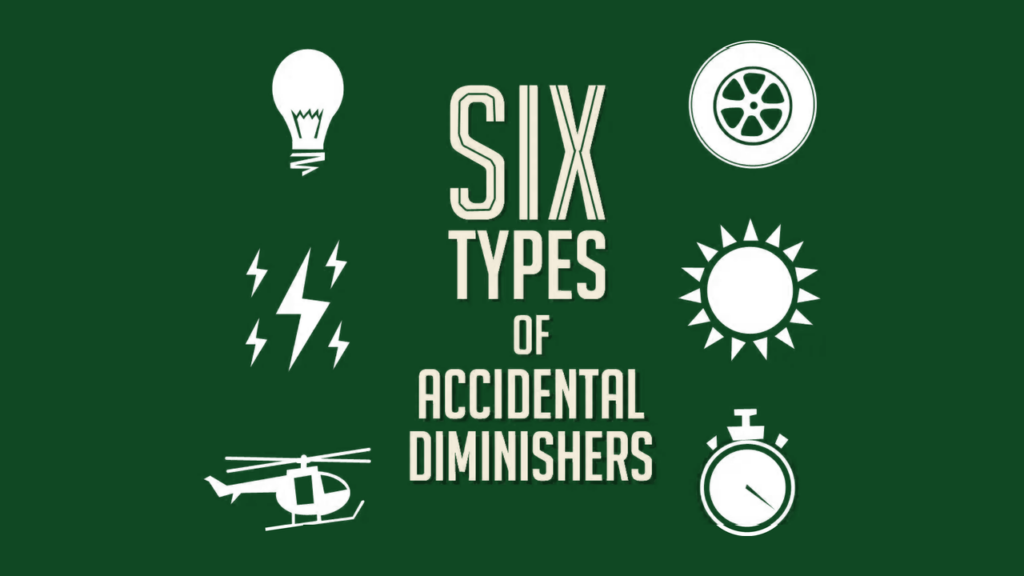
In her later work, Wiseman talks about the accidental diminisher, the leader with good intentions and the opposite effect. Here are six of the most common in owner-led businesses:
- The Rescuer jumps in the moment someone struggles, so they never build the muscle.
- The Rapid Responder answers everything instantly, so no one else needs to think.
- The Always On brings so much energy and so many opinions that others quietly tune out.
- The Pacesetter leads from the front at full speed, so the team ends up watching.
- The Idea Guy has a new idea every week, so the team either goes quiet or keeps chasing the latest one.
- The Perfectionist wants everything done just right, so people stop trying because it’ll get redone anyway.
I’ll own mine first: I’m a Pacesetter. Leading from the front at full speed feels like the right thing to do, and without meaning to, I can leave my team watching instead of running with me.
None of these are character flaws. They’re strengths that worked brilliantly when the business was small and haven’t been adjusted for where it is now. Seeing yours clearly is where leading others starts, and why leading self always has to come first.
Four questions to sit with this week
- If I disappeared for two weeks, which decisions would grind to a halt?
- What does each person on my leadership team do brilliantly, and am I actually using it?
- Who does most of the talking in our leadership meetings?
- What have I “delegated” that’s quietly found its way back to me?
If a couple of those made you squirm, good. That’s usually where the real work starts.
Where to start
Our Future Leaders Program runs on 22-23 October in Sydney. It’s two days for your emerging leaders, building the self-awareness, emotional intelligence and ownership that great leaders are built on. It includes DiSC and a 1-on-1 coaching session to turn insight into action.
Spots are limited. We keep the group small on purpose. Register here. If you’d like to talk it through, just book a call here. I’d love to hear what’s going on in your business.
Developing leaders who create leaders.